Working to reduce missed colorectal cancer

 Colonoscopy Conference Poster
Lead Designer: Guillermina Noël
Jr. Designer: Saul Sych
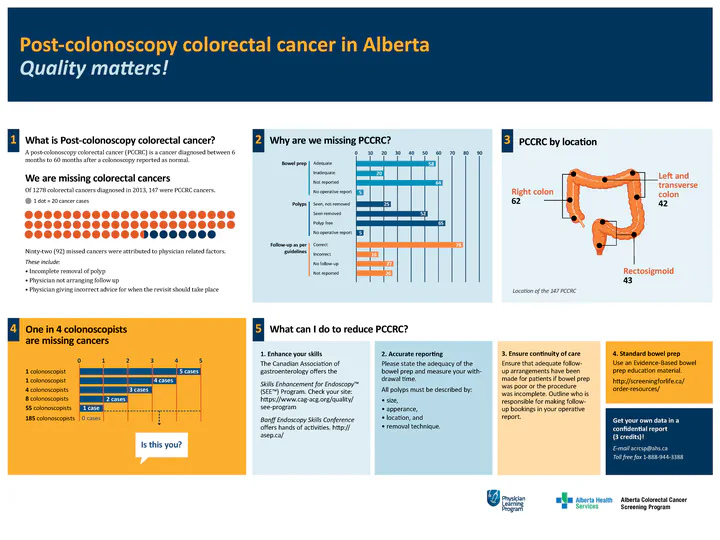
Colonoscopies are recommended as the primary method of screening for colorectal cancer by many experts, including the Canadian Association of Gastroenterology. A post-colonoscopy colorectal cancer (PCCRC) is a cancer diagnosed between 6 months and 60 months after a colonoscopy that reported no cancer. Alberta’s PCCRC rate is higher than the national average indicating that there may be an issue in the quality of colonoscopies being performed.
To gain a better understanding of colorectal cancer incidence in Alberta, we looked at the data. We identified factors contributing to PCCRC and determined the PCCRC rate of Alberta’s healthcare providers. Using this information, we created a report for healthcare professionals who perform colonoscopies that identified contributing factors and proved information on how to reduce PCCRCs. Our partnership with the Alberta Colorectal Cancer Screening Program allowed us to send the reports to over 500 healthcare professionals that perform colonoscopies in Alberta. Of the 500 healthcare professionals that received aggregate reports, 93 physicians registered for and received individualized reports. Over 90 recipients registered to receive confidential, individualized report that summarizes their practice on PCCRCs during the study period.
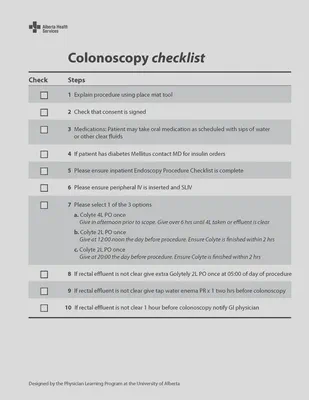
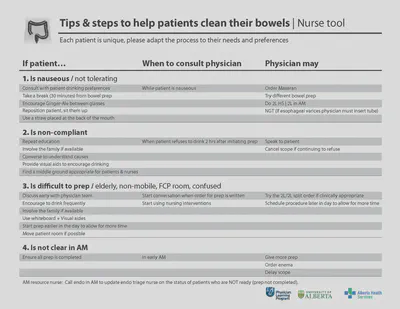
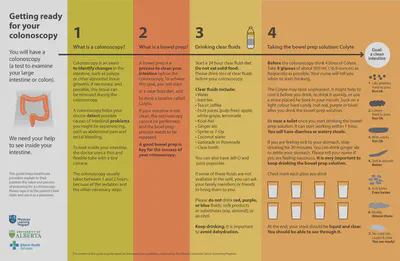
One of the contributing factors to PCCRCs was an inadequate bowel prep for the colonoscopy. As we explored this problem further we found that the nurses required a standardized procedure for prepping patients. Non-compliant patients, side-effects to the medication, and complications in the bowel prep were all contributing to nursing struggles.